0405 004 957info@adelaiderenos.com.au
Unit 29 Level 12/720
Anzac Hwy, Glenelg SA 5045
Anzac Hwy, Glenelg SA 5045
BLD 323576 / PGE 323605





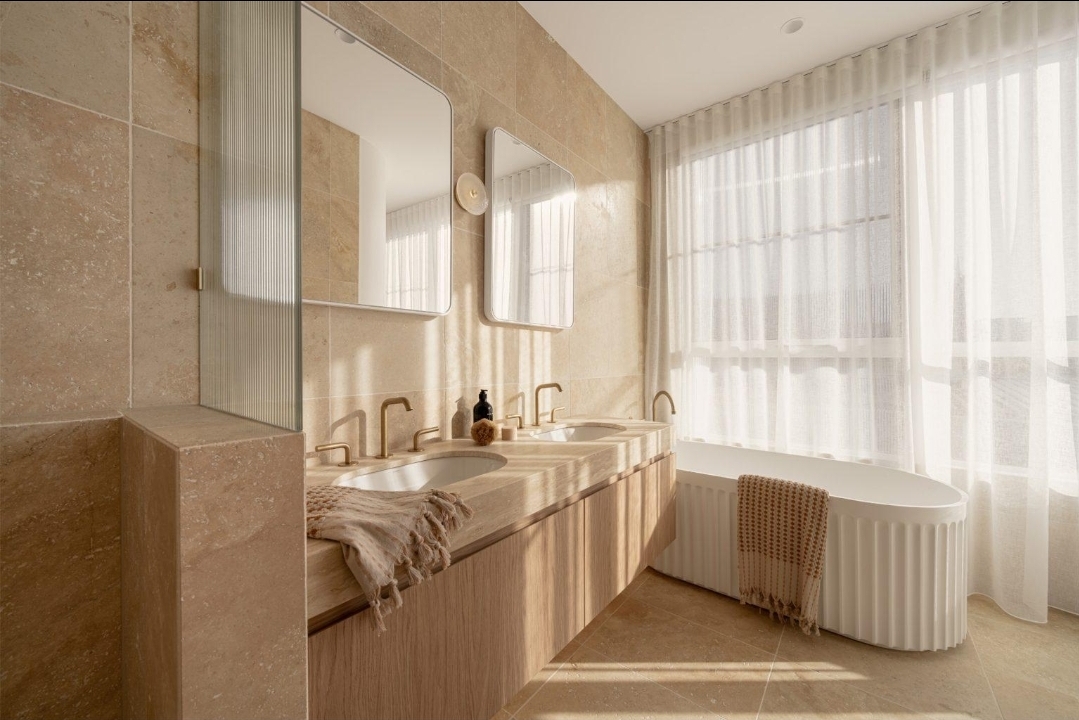
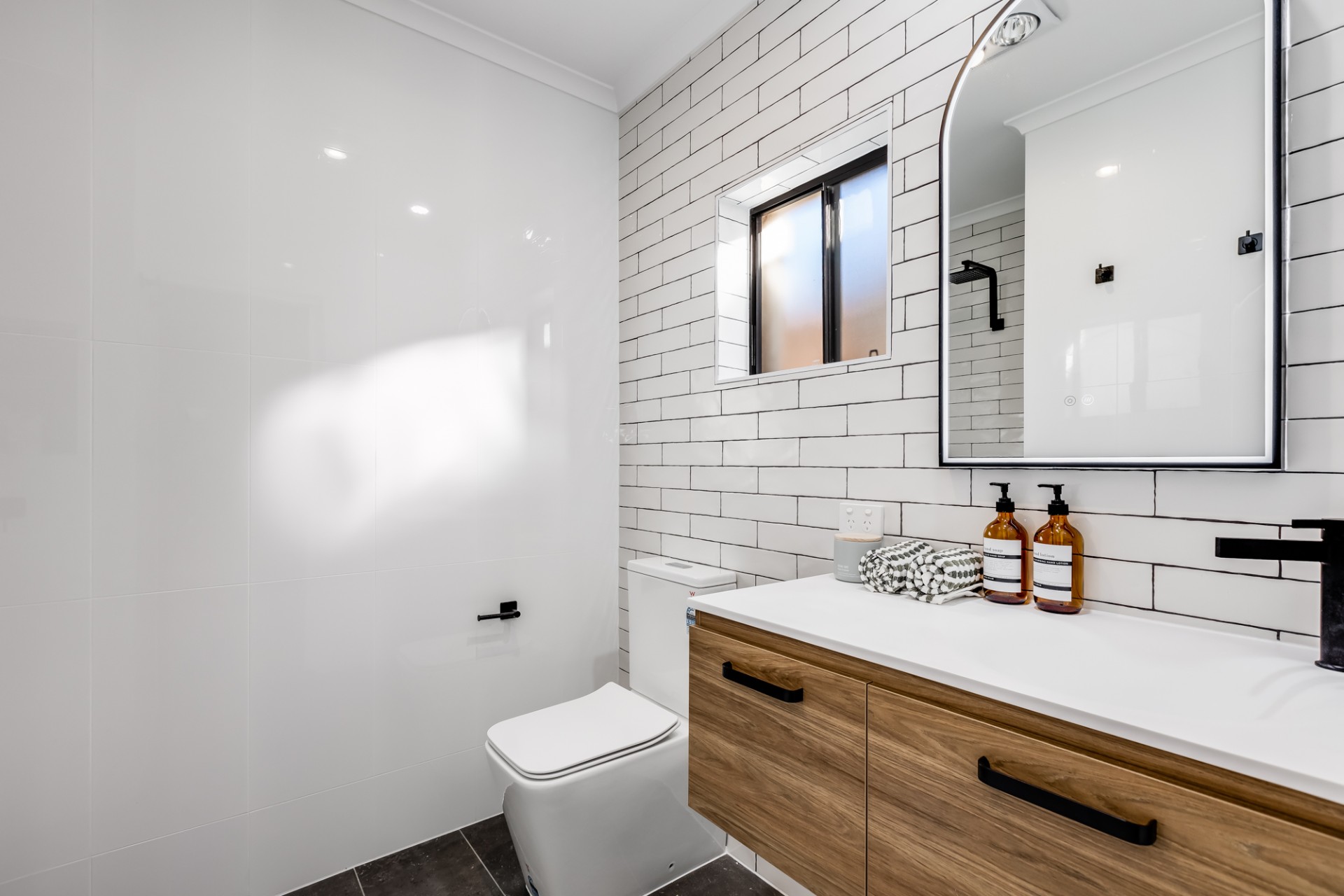
Most people planning a bathroom renovation spend a lot of time thinking about what they can see.
Tiles. Tapware. Vanity. Shower screen. Lighting.
We understand why. That's the exciting part.
But some of the most important work in a bathroom is the work you'll hopefully never see again.
Waterproofing sits underneath the finished bathroom, protecting the building from the water and moisture the room deals with every day. Done properly, you probably won't think about it again. Done poorly, you may not know there's a problem until well after the bathroom looks finished.
At Adelaide Renos Group, we manage complete bathroom renovations across Adelaide, with projects typically starting from around $30k.
This isn't a DIY waterproofing tutorial. It's a straightforward explanation of what homeowners should understand about bathroom waterproofing before the tiles go down.
Good bathroom waterproofing depends on what happens before, during and after the membrane goes on. The surface underneath has to be sound, dry enough and primed where the system requires it. The membrane has to be applied to the manufacturer's specification, with waterstops and junctions detailed properly. And it needs enough curing time, and protection, before tiling starts. In Australia, this work is governed by the National Construction Code and, where it's the chosen pathway, AS 3740:2021.
This catches some homeowners by surprise.
Tiles and grout form the finished surface of the bathroom, but they shouldn't be treated as the waterproofing system itself. The protection happens underneath.
A wet-area system needs to deal with the places where water is most likely to find its way through: shower areas, floors where required, wall-to-floor junctions, corners, penetrations and other changes in the surface.
Once the bathroom is finished, most of this work disappears. You see beautiful tiles. We're also thinking about what's behind them.
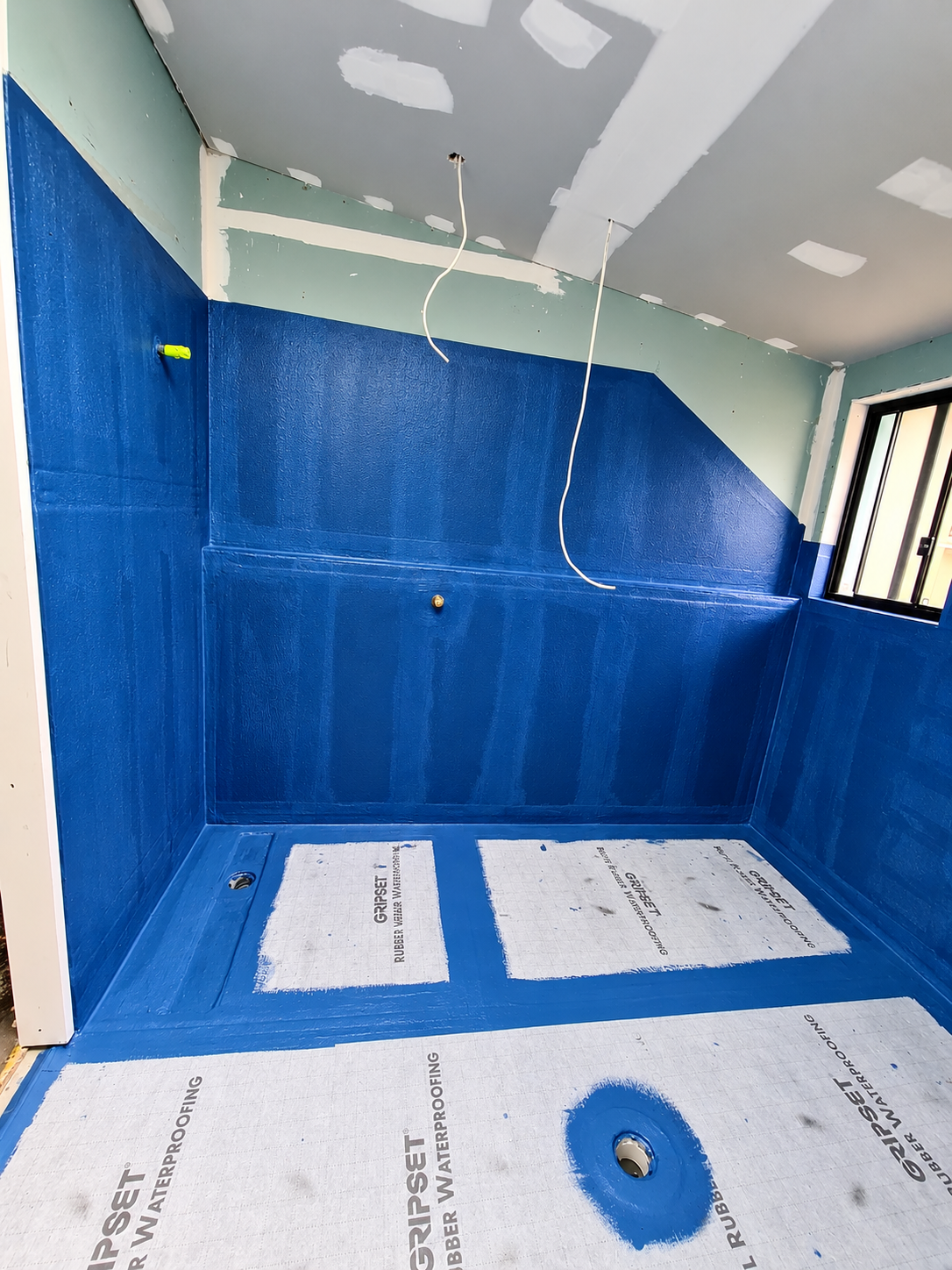
You'll often hear AS 3740 mentioned when bathroom waterproofing comes up.
AS 3740:2021 is the Australian Standard for waterproofing domestic wet areas. For houses, the National Construction Code sets out wet-area requirements in the Housing Provisions, and AS 3740:2021 is one recognised way of meeting them. South Australia also has some state-specific variations in this part of the code, which is one more reason the work should be handled by people who do it here every week.
For homeowners, the important point isn't memorising clauses or becoming an expert in Australian Standards. You shouldn't have to.
What matters is understanding that waterproofing isn't simply painting some membrane around a shower and calling it finished. The wet area has to be considered as a system:
That's the conversation worth having with your renovator.
Good waterproofing starts well before the membrane comes out.
After demolition, we look at the condition of the walls, floor and substrates, the shower area, the waste locations and how water needs to move, and any penetrations. We also look at whether anything uncovered during demolition needs to be dealt with first.
Sometimes an existing bathroom comes apart exactly as expected. Sometimes you find evidence of previous work that changes the conversation. That's renovation. The important thing is not to cover a problem because the programme says it's time to waterproof.
Waterproofing and drainage can't really be thought about separately. Water needs somewhere to go.
The NCC requires falls towards a floor waste wherever one is installed, so set-out and screed levels need to be right before waterproofing, not corrected afterwards with extra tile adhesive. You don't need to calculate gradients yourself, but you should expect your renovator to have planned drainage, wastes and falls as part of the bathroom design.
Where a new screed is laid to create falls, it has to be dry enough, and suitable for the chosen waterproofing system, before any membrane goes over it.
A screed that looks dry on the surface isn't necessarily ready. Moisture can still be sitting below the surface, particularly in cooler or damp weather. Applying a membrane over an unsuitable or overly damp substrate can affect how well it bonds and cures, and that kind of problem may not show itself until well after the bathroom is finished.
The same thinking applies to walls and sheeting. Surfaces should be clean, sound and suitable for the system being used.
Most waterproofing systems rely on proper substrate preparation and, where the manufacturer requires it, a primer.
The primer has to be compatible with both the substrate and the membrane. Not every product or surface has the same requirements, which is why we work to the specification of the system being used rather than a habit or a rule of thumb.
The membrane is applied to the manufacturer's specification. That covers the number of coats, coverage, thickness and detailing.
One heavy coat isn't an acceptable shortcut for two or more proper ones. Each coat needs its required drying or recoat time before the next goes on, and the detailing at corners, junctions and penetrations needs the same care as the open areas.
A large, flat section of wall is relatively straightforward. Bathrooms become more interesting at the transitions: where the wall meets the floor, where two walls meet, around a niche, around a waste, around plumbing penetrations, at the shower entrance, and where one material meets another.
These details occupy only a small part of the bathroom, but water doesn't care how good the finished bathroom looks. It looks for a path.
Waterstops deserve more attention than they usually get.
A waterstop is a strip installed at the edge of a wet area, typically at a shower opening, a doorway or a transition to another floor. Correctly positioned, it helps keep water within the intended wet area and stops moisture travelling underneath adjoining floor finishes, such as a hallway floor or the drier part of the bathroom.
A waterstop only works if it's properly integrated with the waterproofing system, with the membrane detailed to it rather than simply running past it. Once the tiles are down you'll barely know it's there, but its position and how it ties in make a real difference.
Tiling can't simply start the moment the last coat goes on.
The completed membrane needs enough drying or curing time for the system that's been used. That time varies between products, and temperature, humidity and ventilation all affect it. A cold, still Adelaide winter morning isn't the same as a warm, dry day in February. There's no single figure that applies to every membrane, so we follow the manufacturer's requirements rather than a blanket rule.
Waterproofing isn't the final stage. The membrane still has to survive the trades and foot traffic that follow, so it needs to be protected until tiling and finishing are complete. The tiler then needs to work with it, using compatible adhesives and leaving junctions and movement joints as they should be.
You can have a skilled waterproofer, but waterproofing still sits inside a larger construction sequence. What happened before they arrived matters. What happens after they leave matters too.
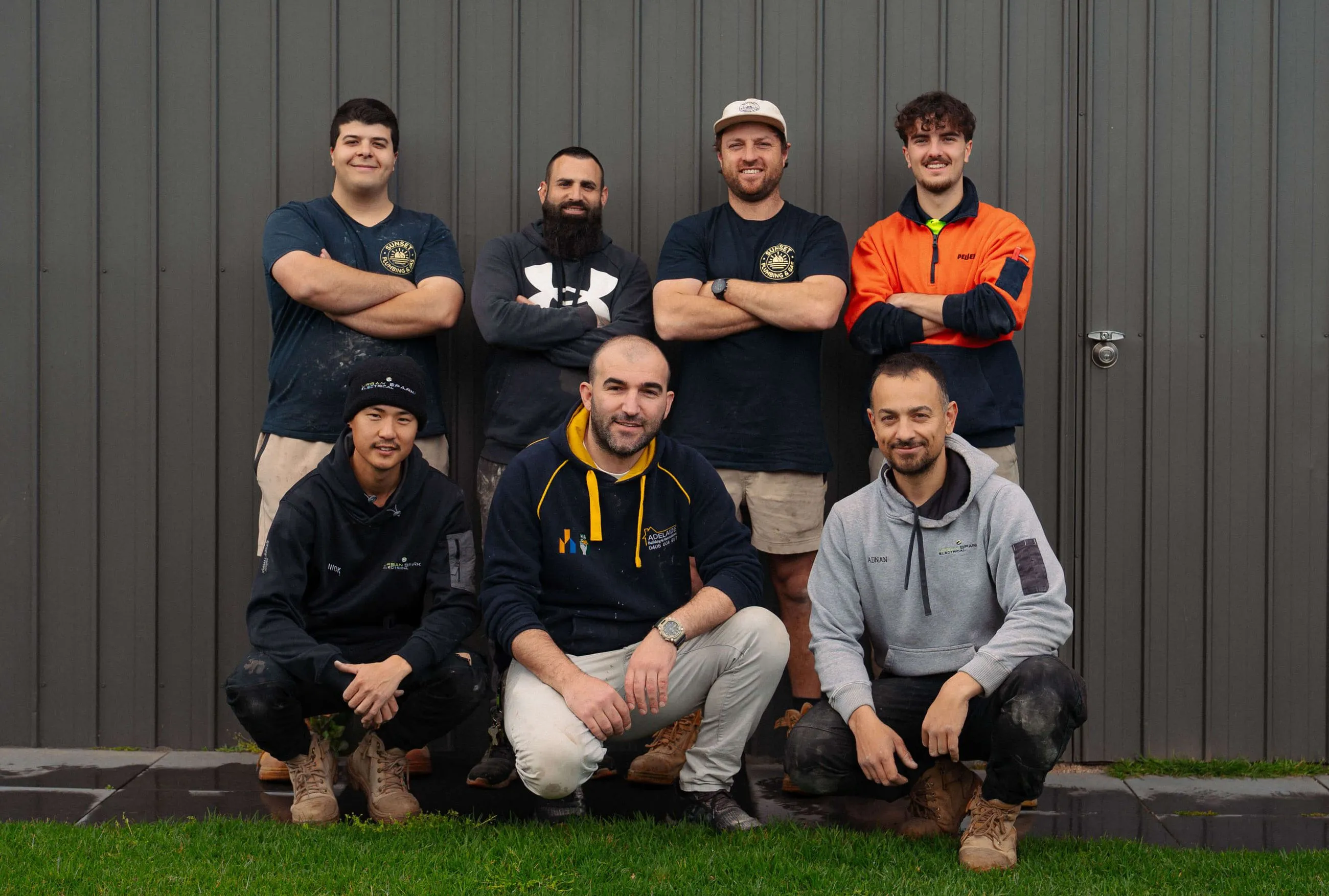
On our complete bathroom renovations, waterproofing is part of the overall scope, not an optional extra. Preparation, plumbing, wet-area set-out, falls, screed, waterproofing, tiling and finishing are planned as one sequence and carried out by our established team of trades, so each stage is ready for the next and homeowners aren't left working out which trade is responsible for what.
If you'd like to see how the stages fit together over a full project, our process page and Adelaide bathroom renovation timeline guide are useful companions. Proper curing time is one of the reasons a well-run bathroom shouldn't be rushed.
Waterproofing is one of the most important parts of a bathroom renovation, yet much of the work is hidden once the tiles are installed.
That's why it's worth asking a few questions before work begins, rather than discovering later that something wasn't included or properly explained. A good renovator should be comfortable discussing how waterproofing will be handled, who's responsible and how it fits into the overall construction process.
Is waterproofing included in the quoted scope?
Check that it's clearly listed, along with the preparation that goes with it.
Who is responsible for preparing and waterproofing the bathroom?
There should be clear responsibility, not assumptions between different trades.
How are screed preparation, priming and membrane drying times managed?
A clear answer shows these stages have been allowed for in the programme rather than squeezed.
How will waterstops, junctions and penetrations be detailed?
You don't need a technical drawing, just a sensible explanation of how the edges of the wet area are handled.
What happens if damaged or unsuitable substrates are found during demolition?
Older bathrooms can reveal surprises. It helps to know how that would be communicated, priced and dealt with.
How will the waterproofing be protected before tiling and finishing?
Other work still has to happen, and the membrane needs to come through it undamaged.
How is the work checked and documented before it's covered?
Ask what records or certification you'll receive once the waterproofing is complete.
Asking these early helps avoid misunderstandings, delays and potentially expensive problems later. You don't need the most technical answer. You need a clear one.
Bathroom quotes across Adelaide can vary significantly. A lower quote doesn't automatically mean the waterproofing is poor, and a higher quote doesn't automatically mean it's excellent.
What matters is the scope. What preparation is included? What's happening underneath the tiles? What happens if something unexpected is uncovered? Are you actually comparing the same level of work?
We've covered this in more detail in our guide to why bathroom renovation quotes are so high in Adelaide. Our hidden costs of a cheap bathroom renovation piece is also useful when you're comparing options.
Existing homes are one reason we don't like making assumptions before demolition.
An older bathroom may have been renovated before, sometimes more than once. Different materials, old plumbing arrangements, previous repairs and earlier waterproofing approaches can all be sitting behind what looks like an ordinary bathroom. You don't know everything until you open it up.
That doesn't mean every older bathroom will reveal a disaster. Most don't. It simply means the renovation needs enough flexibility to assess what's actually there. If something needs attention before the bathroom can move forward properly, we'd rather have that conversation then than cover it and keep going.
For local context on the homes we work in around Glenelg and Adelaide's west, see our Glenelg and western Adelaide bathroom renovations guide.
That's really the goal.
Once your bathroom is finished, you shouldn't be standing in the shower thinking about waterproofing. You should be enjoying the bathroom. The layout works. The water drains properly. The finishes look right.
And underneath all of that, the work you can't see has been given the same attention as the work you can.
AS 3740:2021 is the Australian Standard for waterproofing domestic wet areas. The National Construction Code sets out wet-area requirements for houses and recognises AS 3740:2021 as one way of meeting them. For homeowners, the important thing is that the wet area is built as a complete system, not treated as a single coat of membrane.
Tiles and grout shouldn't be relied on as the waterproofing system. The protection sits underneath the finished surfaces and needs to be properly integrated with the bathroom construction.
It depends on the waterproofing system and the conditions. Each product has its own drying, recoat and curing times, and temperature, humidity and ventilation all affect them. There's no universal figure, so tiling should only start once the manufacturer's curing requirements for that system have been met.
A waterstop is a strip at the edge of a wet area, such as a shower opening or doorway, that helps keep water within the wet area and stops it travelling under adjoining floors. It has to be integrated with the waterproofing system to do its job.
It depends on the bathroom design, the wet-area layout and the applicable construction requirements. Ask your renovator to explain which areas will be waterproof or water resistant in your bathroom and why.
Usually at the details: wall-to-floor junctions, corners, penetrations, shower areas, wastes, niches, waterstops and transitions between surfaces. Preparation, such as a damp or unsuitable substrate, can also play a part. That's why preparation and detailing matter as much as the membrane itself.
Yes. Waterproofing forms part of our complete bathroom renovation scope and is coordinated with the preparation, plumbing, tiling and finishing around it.
No. Your renovator should be able to explain the approach clearly, answer reasonable questions and take responsibility for coordinating the wet-area construction as part of the overall project.
If you're planning a complete bathroom renovation in Adelaide, you don't need to arrive with every technical detail figured out. That's our job.
We look after the whole bathroom, from demolition and preparation through to waterproofing, tiling and finishing, with our own established team of trades. Our complete bathroom renovations typically start from around $30k, depending on the existing bathroom, scope, layout and selections.
You can explore our bathroom renovation packages, read our Adelaide bathroom renovation cost guide, or simply book a chat. You can also contact us or call 0405 004 957. More guides sit on our resources hub.
No pressure. Just a clear conversation about your bathroom and whether we're the right fit.
0405 004 957
info@adelaiderenos.com.au
Unit 29 Level 12/720 Anzac Hwy, Glenelg SA 5045
BLD 323576 / PGE 323605